Film finance · Sept 26, 2026
Section 168(k) bonus depreciation for film: the structure that doesn’t need Congress
What changed after Section 181 expired, and why the timing of an investment now matters.
Also on Act One MediaIndustry · Apr 28, 2026 · 7 min read
Originally published on Act One Media.
Four trends from CinemaCon 2026 — longer theatrical windows, franchise fatigue, the rise of female- and Black-led tentpoles, and the push toward immersive theatrical experiences — all point in the same direction. There has rarely been a better structural moment for independent film.
Here's something most people don't know about CinemaCon: the studio presentations are protected like state secrets. When the lights go down at the Colosseum at Caesars Palace and Spielberg, Nolan, Michael B. Jordan, or The Rock walks out to introduce footage from an unreleased film, a security detail equipped with night vision goggles sweeps the auditorium watching for phones.
I learned exactly how serious that is during one of the studio presentations. A woman a few rows in front of me had her phone up, recording. Within seconds the night-vision team had her marked. They pulled her out of her seat, walked her into the hallway, scrolled through her phone, and discovered she'd been doing it all week — and that she had already sent the files to someone else.
After the presentation, what looked like a SWAT-style security detail surrounded her and disappeared her down a side corridor. We saw her later, unharmed, but she had committed criminal copyright piracy and almost certainly was banned from CinemaCon for life.
That should tell you something about what gets shown at CinemaCon. The studios aren't casually previewing content — they're laying out the strategy behind their next two years of theatrical releases. And for those of us financing and producing independent film, that strategy has real consequences.
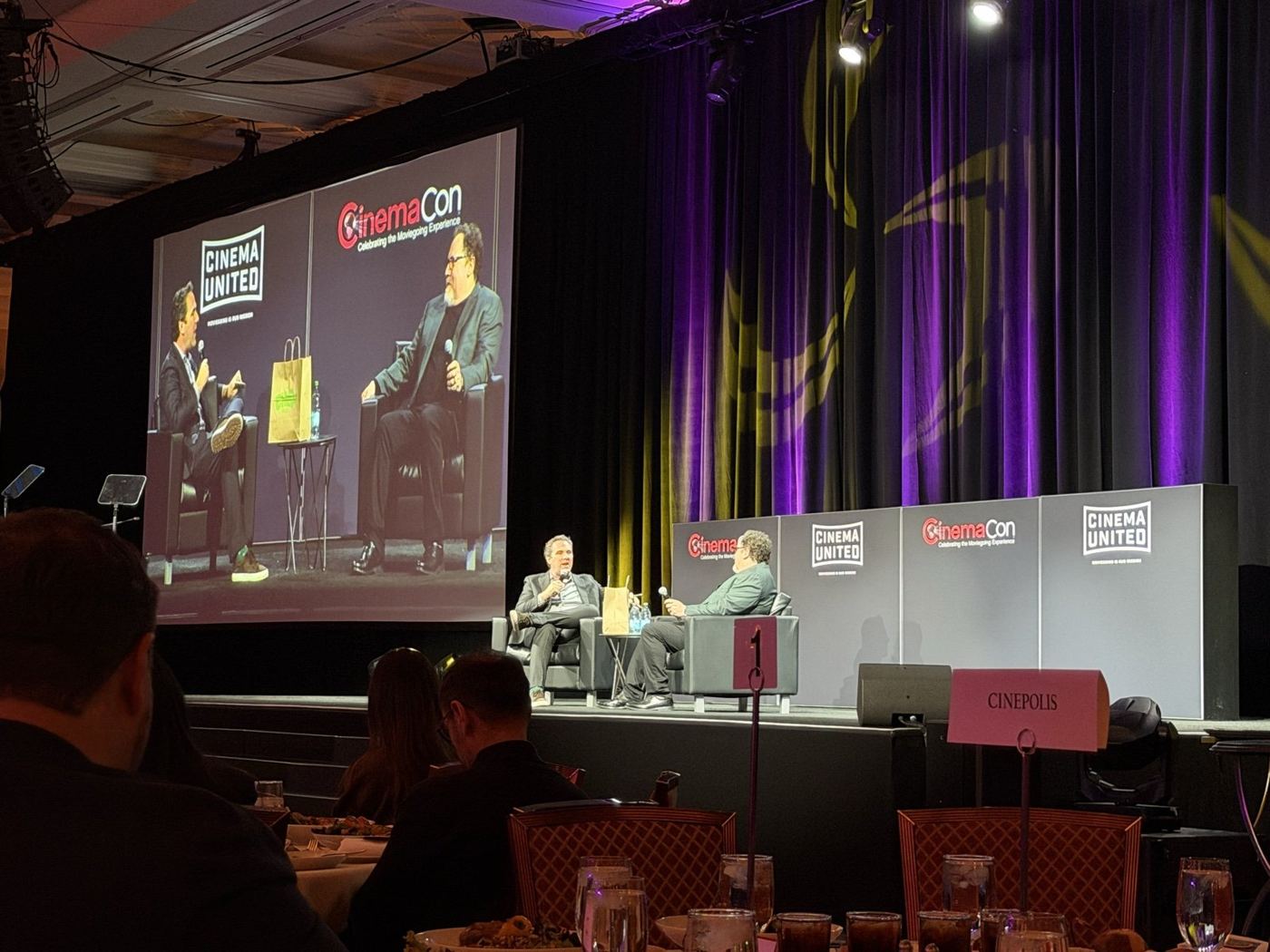
Most CinemaCon coverage is about which trailer got the loudest applause. I was there for a different reason: meeting with sales agents and distributors, and figuring out what major-studio moves mean for the indie market. Four trends stood out, and they all point the same direction.
For years, the studios chipped away at the theatrical exclusive window. During the pandemic, Universal famously cut it as low as 17 days before pushing titles to premium VOD. That experiment is officially over.
At CinemaCon 2026, every major studio re-committed to theatrical windows of at least 45 days. Paramount's David Ellison made it the centerpiece of the studio's keynote, and Universal pledged to move to 45 days starting in 2027. As Daniel Loria of The Boxoffice Company put it after the convention: "Windows aren't a point of contention anymore, and I think that is a major development in the relationship between studios and exhibition."
Then Steven Spielberg, accepting an award during Universal's presentation, pushed the room even further. After praising Universal's 45-day commitment, he turned auctioneer:
"Today I gotta be greedy: Do I hear 60 days? 90 days? 120 days? Those days have got to come back!"
— STEVEN SPIELBERG, CINEMACON 2026 (via The Wrap)The room erupted.
This sounds like a story about studios and exhibitors. It is actually a story about streamers. Independent film leans heavily on SVOD as its primary revenue channel. When Sony, Warner Bros., Universal, Paramount, and Disney lock their tentpoles into 45-plus-day exclusive theatrical runs, those titles stop competing with indie content on streaming for six weeks or more per release.
The streamers' acquisition pipelines do not slow down — subscribers still demand fresh content every week. As of early 2026, roughly 72% of new SVOD original acquisitions globally already come from independent producers, and the indie market is projected to grow from $8.6B in 2025 to $15.4B by 2034 at a 6.7% CAGR (Market Intelo).
The single most candid moment of CinemaCon 2026 came from Spielberg, again. While previewing his first original film in years, Disclosure Day, he warned the room:
"If all we make is known, branded IP, we're going to run out of gas. There is nothing more important than giving the audience visual stories — and they can be in any form — but we need to tell more original stories."
— STEVEN SPIELBERG, CINEMACON 2026 (via Variety)Walking the floor, you could see exactly what he was warning about. Studio slates are dominated by Avengers: Doomsday, Top Gun 3, Dune 3, Practical Magic 2, Jumanji, more Spider-Man — sequels, reboots, and extensions of known IP. Studios know franchise fatigue is coming; they say it out loud. But once a film carries a $200M–$300M production budget plus another $100M+ in P&A, the financial physics force them toward "safe" IP. You cannot put a quarter-billion dollars on an unknown story.
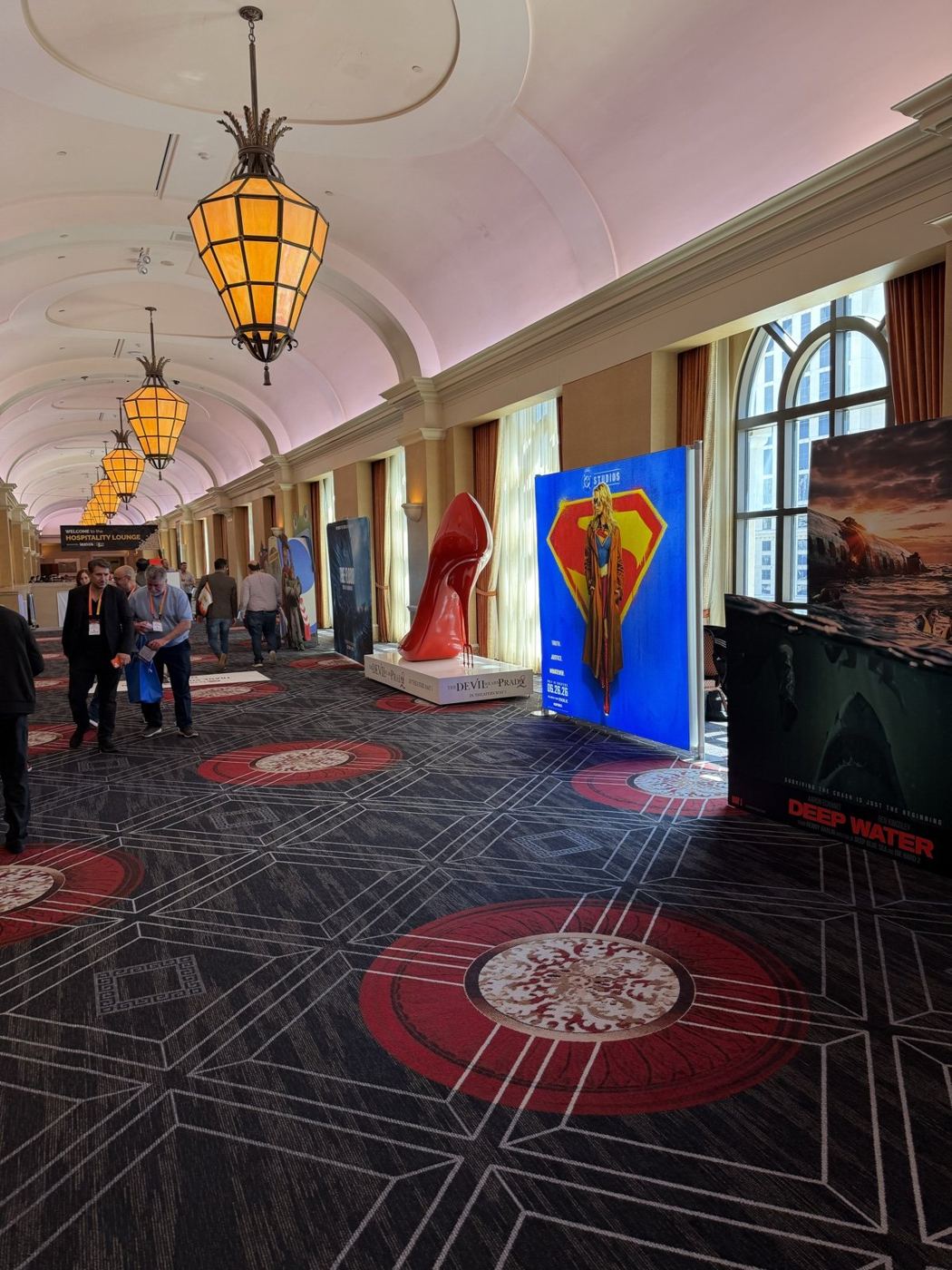
A "high-budget" independent film at $5M–$25M is still dwarfed many times over by a studio tentpole. That difference in stakes is exactly what gives indie producers the freedom to take creative risk on original IP — the same risk the majors are now publicly admitting they cannot take.
When the most accomplished director of his generation tells a room full of studio chiefs they will run out of gas without originals, and the studio chiefs respond by greenlighting Top Gun 3, the message for indie is clear: the market for fresh, original stories is not being served by the studios. It will be served by us.
The third trend was less covered in trade press but, in some ways, the most economically important for indie. Studios are leaning hard into projects led by women and Black creators — and the projects are working.
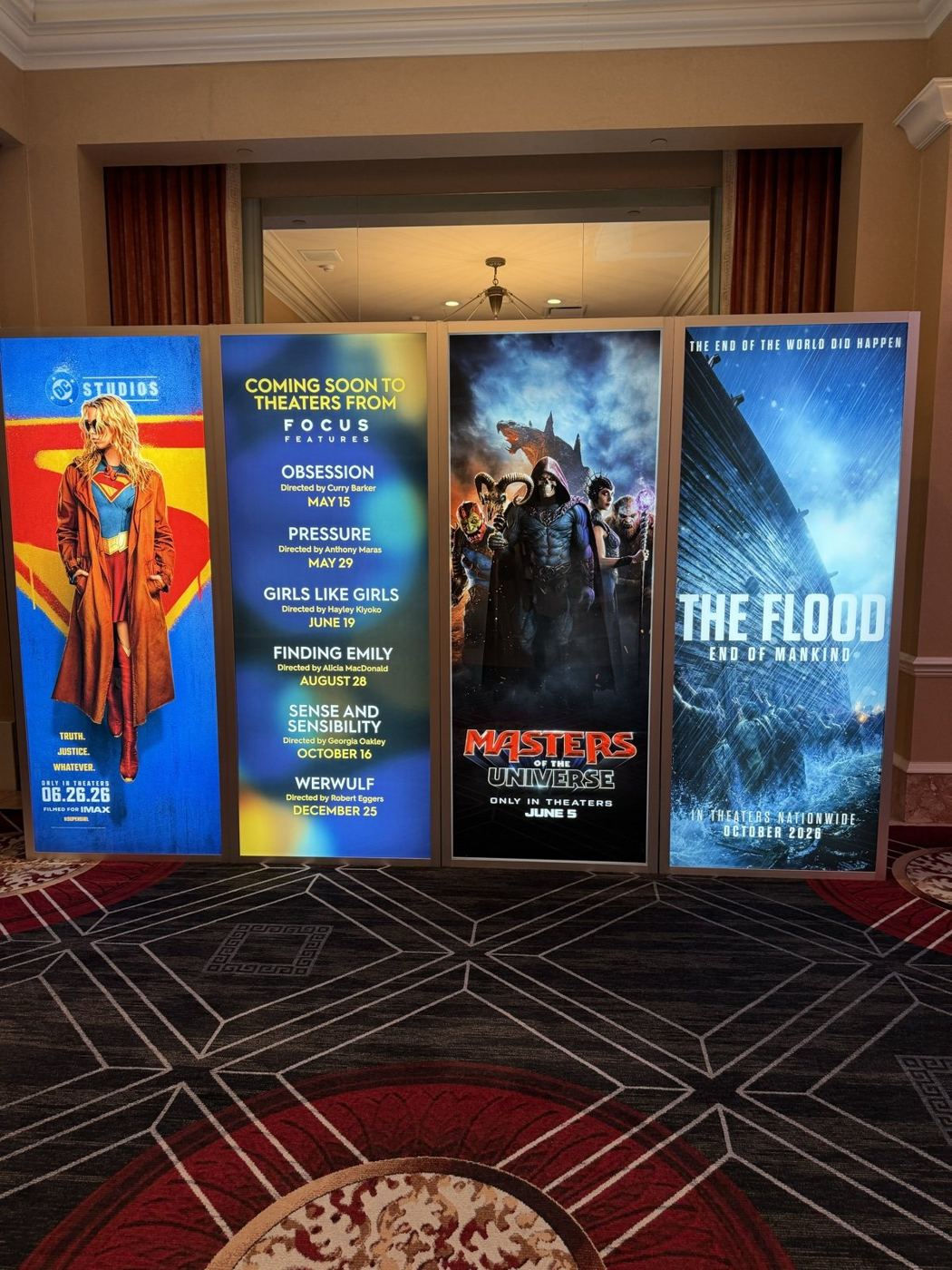
Independent film is sold on comparables. The minimum guarantees a sales agent can fetch in Berlin, Cannes, AFM, or TIFF — and the offers a producer can extend to lead talent — are pegged to the box-office and streaming performance of comparable studio titles.
When a Brontë adaptation by a female director crosses $241M and becomes the year's first $100M film, it resets the comp set for every period drama, every female-led literary adaptation, and every project from a writer-director with a distinctive voice. As those benchmarks rise for diverse-led projects, the offers we can structure around women writers, Black writers, and adaptations of female-authored novels rise with them.
The final theme that ran through every studio presentation: theaters are no longer trying to compete with home viewing on convenience. They are competing on experience.
Most independent producers will never compete with Disney on premium-format spend. But the message from exhibitors at CinemaCon was that theaters are actively hunting for content that justifies the trip out of the house — and that hunt is not limited to $200M tentpoles.
Independent films that can build an event around the theatrical release — interactive screenings, immersive single-location experiences, filmmaker-led tour models, premium-format exclusives, "you had to be there" moments — are positioned to take advantage of an exhibition industry that needs novel programming. Streaming will remain the primary financial engine for indie, but theatrical event structures are coming back into the model.
Pull these four signals together and the picture is consistent: the major studios are concentrating their bets on a narrower band of franchise IP, holding it in theaters longer, and quietly opening the door for original, voice-driven, diverse, and experience-led content to take the rest of the market.
That is the market independent film occupies. It is bigger today than it was a year ago, and it will be bigger again next year.
For our investors and producer partners, the implications we're tracking:
CinemaCon 2026 was, on its surface, a celebration of the major studios. Read carefully, it was also the clearest signal in years that the structural opportunity for independent film has rarely been better.
Keep reading

Film finance · Sept 26, 2026
What changed after Section 181 expired, and why the timing of an investment now matters.
Also on Act One Media
Guides
Capital stacks, tax deductions, and equity participation, explained from the ground up.
Also on Act One Media